
Delving into the comparison of Shopify Capital Loan vs Traditional Business Loans, this article aims to provide a detailed insight into the key differences between these two financing options.
Exploring various aspects such as application processes, loan amounts, interest rates, and benefits, this analysis will help you make an informed decision for your business needs.
Overview of Shopify Capital Loan and Traditional Business Loans
When it comes to financing options for businesses, Shopify Capital Loan and Traditional Business Loans are two common choices. Let's take a closer look at the key features and eligibility criteria for both.
Shopify Capital Loan
Shopify Capital Loan is a financing option specifically designed for Shopify merchants. It offers a quick and easy way to access funds to grow your business. The loan amount is based on your store's performance on the Shopify platform.
Traditional Business Loans
Traditional Business Loans are offered by banks, credit unions, and other financial institutions. These loans typically require a detailed application process, collateral, and a good credit score. The loan terms and interest rates may vary depending on the lender.
Eligibility Criteria
- Shopify Capital Loan:
- Must be a Shopify merchant
- Minimum sales threshold on the Shopify platform
- Valid business history on Shopify
- Traditional Business Loans:
- Good credit score
- Business plan and financial statements
- Collateral may be required
Application Process
When it comes to applying for funding, the process can vary significantly between Shopify Capital Loans and Traditional Business Loans. Let's delve into the details of each application process.
Shopify Capital Loan Application Process
To apply for a Shopify Capital Loan, the process is relatively straightforward. As a Shopify merchant, you may receive a loan offer directly within your Shopify dashboard based on your store's performance. If you choose to accept the offer, you can complete the application online by providing some basic information about your business.
Shopify will then review your application and determine the loan amount you are eligible for.
Traditional Business Loan Documentation
When applying for a Traditional Business Loan, you will typically need to provide a more extensive list of documentation compared to a Shopify Capital Loan. This may include business financial statements, tax returns, business plans, personal credit history, collateral, and other relevant documents.
The lender will analyze these documents to assess your creditworthiness and determine the loan terms.
Approval and Disbursement Time
In terms of approval and disbursement time, Shopify Capital Loans generally have a quicker process compared to Traditional Business Loans. With Shopify Capital, since the loan offer is based on your store's performance data, the approval process can be expedited, and funds can be disbursed within a few days.
On the other hand, Traditional Business Loans may take longer to process due to the more extensive documentation required and the lender's thorough evaluation process, which can result in a longer wait time for approval and disbursement.
Loan Amount and Interest Rates

When it comes to comparing the loan amount, interest rates, and repayment terms between Shopify Capital Loan and Traditional Business Loans, there are key differences to consider.The maximum loan amounts offered by Shopify Capital Loan typically range from $200 to $2 million, depending on your business's sales history and other factors.
On the other hand, Traditional Business Loans can offer higher loan amounts, sometimes exceeding $5 million, but they often require more extensive documentation and collateral.
Loan Amount Comparison
- Shopify Capital Loan: $200 to $2 million
- Traditional Business Loans: Often exceeding $5 million
Interest Rates and Repayment Terms
- Shopify Capital Loan: The interest rates for Shopify Capital Loan are fixed, and the repayment is based on a percentage of your daily sales through Shopify.
- Traditional Business Loans: Traditional Business Loans may have variable interest rates depending on the lender, and the repayment terms are typically structured with monthly installments over a set period of time.
Benefits and Drawbacks
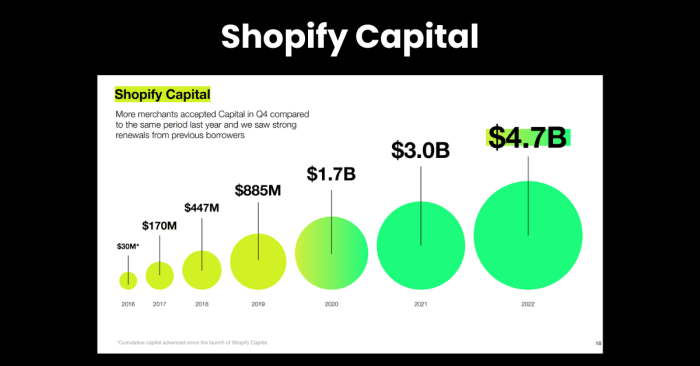
When considering whether to opt for a Shopify Capital Loan or a Traditional Business Loan, it is crucial to weigh the benefits and drawbacks of each option. Here, we will explore the advantages of choosing a Shopify Capital Loan over a Traditional Business Loan, as well as the potential drawbacks of sticking with traditional lending options.
Advantages of Shopify Capital Loan
- Fast Approval: Shopify Capital Loans typically have a quicker approval process compared to traditional loans, allowing businesses to access funds promptly.
- No Fixed Monthly Payments: Instead of fixed monthly payments, Shopify Capital Loans are repaid based on a percentage of daily sales, which can be more manageable for businesses with fluctuating revenue.
- No Personal Guarantee: Unlike many traditional business loans that require a personal guarantee, Shopify Capital Loans do not necessitate putting personal assets at risk.
- No Credit Check: Shopify Capital Loans are based on the business's sales history on the Shopify platform, eliminating the need for a credit check.
Drawbacks of Traditional Business Loans
- Lengthy Approval Process: Traditional business loans often involve a lengthy approval process, which can delay access to much-needed funds for business operations.
- Fixed Monthly Payments: Traditional loans typically come with fixed monthly payments, which may be challenging for businesses with inconsistent cash flow.
- Personal Guarantee Required: Many traditional lenders require a personal guarantee, putting personal assets at risk if the business fails to repay the loan.
- Credit Check: Traditional lenders usually conduct a credit check, which can be a barrier for businesses with less-than-perfect credit history.
Impact on Financial Health
Choosing between a Shopify Capital Loan and a Traditional Business Loan can have a significant impact on the financial health of a business. Shopify Capital Loans offer flexibility, speed, and convenience, making them a preferred choice for many small businesses.
On the other hand, traditional loans may come with stricter terms and requirements that could potentially strain the financial resources of a business. It is essential for business owners to carefully evaluate their needs and financial situation before deciding on the type of loan that best suits their business.
Concluding Remarks
In conclusion, understanding the nuances between Shopify Capital Loan and Traditional Business Loans is crucial for any business owner looking to secure financial assistance. By weighing the pros and cons of each option, you can choose the best fit for your specific requirements.
FAQ Resource
What are the eligibility criteria for Shopify Capital Loan?
The eligibility criteria for a Shopify Capital Loan typically involve having a certain minimum sales threshold on the Shopify platform.
How do the interest rates of Traditional Business Loans compare to Shopify Capital Loan?
Traditional Business Loans may have fixed or variable interest rates, while Shopify Capital Loan usually has a fixed fee repayment structure.
What advantages does opting for a Shopify Capital Loan offer over Traditional Business Loans?
Shopify Capital Loan provides quick approval, seamless integration with Shopify platform, and flexible repayment terms, which may not be available with Traditional Business Loans.